The Right words, the Right Room with Grace Fogarty
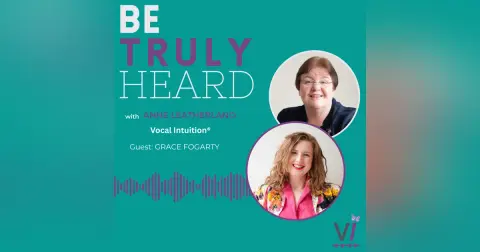


Do you leave networking events feeling encouraged, yet wondering why those lovely conversations rarely turn into clients?
In this episode of Be Truly Heard, part of the From Voice to Opportunity series, I’m joined by networking strategist Grace Fogarty. Grace shares how a year of networking without gaining a client led her to rethink her approach and, eventually, change the direction of her business.
We explore how to make your message relevant to the people listening, choose networking spaces that support your business, and deliver a clear 60-second introduction. We also discuss preparing your voice, mindset and energy so you can connect with people as yourself.
Five highlights
• [02:00] From frustration to opportunity. Grace shares what changed when she stopped relying on her old approach and began making clearer invitations.
• [04:00] What does your listener need to hear? Why focusing on your clients’ problems and desired outcomes can be more effective than listing your experience and qualifications.
• [10:00] Are you in the right networking room? Grace introduces four groups: clients, connectors, cheerleaders and business chums, and explains why the balance matters.
• [13:00] Three essentials for your 60 seconds. Make the problem, the outcome and the next step clear, then maintain your vocal energy so your invitation lands.
• [17:00] Prepare to show up as your best self. How a personal preparation routine can help you manage nerves and bring grounded energy to your conversations.
Connect with Grace
Find Grace Fogarty on LinkedIn https://www.linkedin.com/in/gracefogarty/ to learn about her work and online networking group.
Download her free guide featuring five follow-up messages to help turn networking conversations into booked calls: http://www.presentwithgrace.com/chatstoclients
Get in touch
What could you change to make your next networking meeting more productive? Email me at anne@anneleatherland.co.uk. If you enjoyed this episode, please leave a review on your podcast platform.
Anne: Welcome to the Be Truly Heard podcast, and I'm your host, Anne Leatherland. Now, in this series, we're thinking about moving from voice to opportunity, and my guest today is perfect for that: Grace Fogarty is a networking strategist who's obsessed with helping women in business leave networking events with inquiries instead of a handful of business cards and a free pastry.
And after 12 years of delivering communication training for global organisations, and with a background in acting, Grace brings a fresh perspective to networking. She helps women stop winging it and start networking strategically so it's crystal clear who they help, easy for people to refer them, and much more likely that they'll hear the words, "I need your help," [00:01:00] before the meeting is over.
So Grace, welcome and thank you for coming onto the podcast today.
Grace: Oh, hi Anne. Thank you so much for having me. It's a pleasure to be here. It's a
Anne: pleasure to have you here. And I think when we're thinking about networking, it's a bit like Marmite, isn't it? Mm. It's a bit like people love it or people hate it.
Mm. So tell us first a bit about your story, then, and how you came to be doing what you're doing.
Grace: Yeah. So I started my first business about three and a half years ago now, and my first business was delivering presentation skills workshops to companies. And as soon as I started, I started networking because everyone said, "You've gotta go networking, it's all about who you know."
And so I joined a networking organisation almost straight away. I would go along to those meetings every month. I would refi- like, played around with my 60-second pitch. Um, I was having one-to-ones with people. I was giving [00:02:00] testimonials. And yet, after a year of showing up at these networking meetings, I still had not got any clients for my business.
And I reached a bit of a turning point where I felt that I was kind of starting to question whether it was something that was wrong with me, and it wasn't just that I was questioning whether networking was really the right place for me, but I was also really questioning whether I should even be in business.
And it really, really impacted my confidence, and I remember calling a friend one day after a meeting and kind of crying down the phone to her and saying- ... "I don't, you know, I can't do this anymore 'cause no one really seems to get the value of what I can do," even though I knew I had a lot of value to teach people.
So I was at a bit of a crossroads, and I had to decide: should I stick with networking, or should I try a different way of finding clients? And I could see that it was working for other people, and I thought, " I'm gonna stick with it, but I just need to change my approach." So I completely changed the offer that I was talking about.
I completely changed the way that I spoke about my business, and I started [00:03:00] making more bold invitations to people that I was meeting when I was going networking. And once I'd started experimenting with this approach, I started to find clients. And there was actually one networking meeting that I went to; it was online, and I was invited to go along as a sub last minute, and, uh, I gave my new pitch to this room full of people that I'd never met before, and five people off the back of that pitch said they wanted to have a call with me.
And on one of those calls, someone said yes straight away to joining my new offer. And from that one meeting, I got more leads and more clients and made more money than I had done from a whole year of networking when I was following my old approach. And it was really that point that made me realise so many business owners go networking, and yet so few people are actually told how to do it strategically.
I started helping people to... I started teaching people what I'd learnt about my own business, and I got to a point where I decided, actually, I'm gonna pivot, and so I stopped doing the corporate [00:04:00] workshops. I pivoted, and now networking strategy is what I do full time.
Anne: Amazing. So you were working with corporate people initially. What were those workshops about that you were initially doing?
Grace: They were about presentation skills. So I was teaching
Anne: people-
Grace: Oh, I see ... confidence at the front of the room and things, yeah.
Anne: Yeah. And so you changed, you pivoted, and you changed your message in that networking.
Grace: Mm.
Anne: And that's the valuable thing, isn't it? Then, then all of a sudden you have opportunities opening up in front of you-
Grace: Yeah
Anne: Without putting you on the spot too much. What kind of things did you change, do you think?
Grace: So- what, what I used to do is I used to focus more on talking about, uh, my kind of corporate background. Mm-hmm. You know, I really felt like I needed to make a case as to why I was credible, so I would talk about some of the organisations I'd worked with.
I'd also talk a lot about the fact that I'd done acting and comedy and improv. Um, and I'd talk about all the different things I could do, all the skills that I [00:05:00] could train people in. Mm-hmm. And what ended up happening is that people would always, as soon as they heard me talk about acting and comedy, they'd go, "Ooh, that's fun, you know, tell me about the comedy."
Which was nice for my ego, but not so good for business opportunities. And also, I was making my message all about me, and what... it was like, why me? This is why you should work with me. And the biggest thing that I changed in my messaging, that I now teach other people to do, is that when you're going networking, it is not about what you want to say, it is about what your potential client or your potential referrer needs to hear about you.
And really, the focus in my messaging now is centred on the problem that I know the people I help are struggling with, and what is better about their life and their business as a result of fixing that problem. Because ultimately, that's what people are most, uh, interested in hearing. Mm. They don't care that I've worked with HSBC.
You know? They wanna know that I get their problem and that I can, I've got something that can help them [00:06:00] out.
Anne: Well, I suppose they might want to know further down the line, but initially they want to... It's that what's in it for me factor, isn't it?
Grace: Yeah.
Anne: Essentially because, if somebody's going to invest in something, they want to be sure of that.
Grace: Yeah. And I
Anne: think so many people go into networking with that kind of general, this is me, this is who I am, this is what I do. As opposed to speaking to the people in terms of what they actually need, and that's the same for marketing in general, I think.
Grace: Yeah.
Anne: Yeah. And it's the most difficult thing to get used to, to start with.
Grace: Yeah.
Anne: Because of course, you're proud of your stuff, and you want everybody to know, and that makes you feel good. But that's about it. You feel good, and you go home, don't you? And you don't necessarily get the clients that you would like to get. And it's not just about getting clients, is it? It's about helping people because you want to help them as well.
Yeah, to help them not have to do what you have to do, in a sense.
Grace: Yeah. The hard
Anne: way.
Grace: Yeah, [00:07:00] exactly. Yeah, yeah, yeah. Totally. I heard a really, um... a coach, Helen Tudor, talk about that phenomenon actually, that you've just mentioned there of sometimes you can go to an event, uh- Mm-hmm ... and lots of people might give you lots of compliments and say, "Wow, what you do sounds great," and, "I've seen your post on LinkedIn, and I think your work is so important."
And your ego feels incredible, and you can walk away and be like, "Wow, that event was amazing. That was such a good use of my time." But actually, you really need to be asking yourself, "Yeah, did I get compliments or did I actually get some leads that are worth me following up on?" Because the compliments and things can kind of completely, um...
they can completely cloud your judgment actually, as to whether the networking you're doing is worthwhile or not. I saw Helen talk about that: is this an event for your ego, or is it an event for your business? Which I think is, yeah, it's a good way to filter.
Anne: I think that's so true, and I've experienced that as well, and I experience it a lot because of the nature of the work that I do.
Mm-hmm. "Oh, that's [00:08:00] fantastic. Loads of women need help with their voice and their speaking." And does it always translate into work? Not necessarily. Mm-hmm. So we need to ask ourselves, what is it that we need to do to put across why it's worth investing in what we do?
Grace: Yeah.
Anne: And that absolutely backs up what you said.
So why does networking feel so uncomfortable to some people, do you think?
Grace: Yeah, it's a great question. I think what it boils down to is that when you are networking, you are literally putting yourself out there, you know? And as business owners, we spend so much of our time behind our laptops at home, or maybe in a coffee shop or whatever, on our own, fiddling around, and we're kind of left to our own devices. Whereas when you're networking, you've gotta put yourself in an environment where you are meeting people who you have never met before, you don't know. There's [00:09:00] often a lot of nervousness around, are they gonna make me feel accepted? Um, am I gonna ha- have anyone to talk to?
A lot of people also really find it uncomfortable to start a conversation. I hear people say things like, "Oh, I just, you know, I had to give myself a pep talk in the car outside the meeting." And I think it's because you do have to make yourself very vulnerable; most people don't like putting themselves in situations where they're gonna be surrounded by a bunch of strangers.
And then
you add the pressure of actually needing to do something for your business, represent your business, market your business. And yeah, it can, it can be a really intimidating experience, so I totally get it. It does feel hard.
Anne: It, it really does, and it's, it's like another instance of public speaking, isn't it?
Grace: Yeah,
Anne: Very much so
to most people, which is one of those things that's apparently most scary in the world to many people. Yeah. And I understand it, and it's very primaeval, actually. It goes back to those days when we lived in caves. If we weren't accepted, then we weren't part of the group, then we were in [00:10:00] danger.
But once we've actually got into networking, it's then important, isn't it, to find the right spaces for us. And I've been in a number of spaces which have been wonderful, but they're not necessarily the places that will help me to build my business and put across what I need to put across.
Mm. What do you think about that, Grace?
Grace: Yeah, I think it's really important to differentiate between the different networking rooms that you're in and why you're there. So when you go networking, there are four different groups of people that you're likely to come into contact with.
The first is potential clients, or that could be people, your previous clients or current clients. Then there's connectors who are people that have got a brilliant network who work with similar people to you, that could be, um, great referral partners. Then there's cheerleaders who are people that totally get your business.
They're gonna big you up. Maybe they would do things like this, like invite you on your podcast, um, offer to share a post for you, offer to, put something in a newsletter. They're there to support you in other ways. Mm-hmm. And then [00:11:00] there are your business chums, and these are the people you just have brilliant relationships with, who are the kind of people you go for a coffee with and just, you know, moan about how stressful your business is or whatever.
And those are the four kinds of people largely that you meet in networking. Now, often what can happen is that if you are in networking rooms that are primarily made up of chums and cheerleaders- ... and not very many clients or connectors- you can go to those meetings and have a great time and feel really supported and feel really uplifted, which is important, but you can also walk away with not enough of the right connections to actually help you to grow your business.
And so when you're thinking about the different networking rooms that you're in or which rooms that you want to visit, it's really important to make sure that you get the balance because networking is its most productive when you are meeting potential clients and potential connectors. It's always important to make sure that you like the people you're in, you feel comfortable in the environment, and you actually enjoy the experience 'cause if you don't [00:12:00] enjoy it, well, you know.
Yeah. I think there are enough networking meetings out there. You don't have to force yourself to do something you don't like to do. You can find your clients elsewhere. But those are really the two groups of people that you wanna prioritise meeting when you go networking if you are doing it
to be strategic and to get more clients.
Anne: Absolutely. I think there's a place for both actually. Yeah. But I've been in a lot of rooms where it's just become a lovely meeting, we have something to eat, we all go rah rah for each other, and I don't necessarily get much work from it. And I've had to go, you know what?
My time's quite valuable.
Grace: Mm. Yeah.
Anne: And great though it is, and I'll still keep supporting those people, I need to make a different decision for me. Yeah. And that's what I've done. And so those spaces are vital so that when we do speak up, we are finding those opportunities, which takes me to the 60 seconds, which is the part most new networkers absolutely worry about and freak out about the night before.
Grace: Mm.
Anne: And then you [00:13:00] get those who are well and truly used to networking, who no longer make much effort with it, really, and they might just rattle off the same thing every time.
Grace: Mm.
Anne: So how do we go about, in your book, making a good 60 seconds?
Grace: So there are kind of three things that you wanna get really clear in your 60 seconds to help, uh, to make it stand out and to make it easy for people to know what to do when they've listened to you.
You wanna be really clear on the problem that it is that you solve- Mm-hmm ... and being really specific. You wanna avoid kind of being a jack of all trades and saying, "I can help anyone with any kind of problem." Uh, being really specific, what is the problem, the ultimate problem you help people to solve?
The next thing you wanna get clear is what the ultimate outcome is that you help someone achieve. Not what is your programme, what is your offer, how do you work with people, but what is the big thing that is different or better about someone's life because they've worked with you. And that comes back down to what I was saying before about, like, your [00:14:00] message.
You want someone listening to your pitch thinking, "Oh my God, she's talking to me." Mm. "That's exactly something I'm struggling with. That's exactly something I really want in my life." And that's gonna be what gets someone's attention, makes them listen, and makes them pay attention. Then the third thing that you need, which is really, really important, is your call to action, and I know that gets bandied around by every networking group leader there is.
A call to action is not just, "If you're interested, go and have a look at my website." Your call to action needs to be a really clear instruction. What does someone need to do right now if they are interested in getting help from you? Because if someone isn't sure or you've sent them off in a different direction, you are losing the opportu- opportunity to have a conversation with someone that could be a great person to work with.
So that's what you need, the three things, the problem, the outcome, and a really clear invitation that you share at the end. If you've got those three things covered, your pitch is gonna stand out from others in the room, but it's also gonna get the most [00:15:00] important information across about your business.
Anne: Yes, and we can get that into the 60 seconds if it's well-structured- Yeah ... as well. Don't be a rambler who goes on and on for a minute and a half, and Yeah ... you know, you end up being interrupted before- Yeah ... you've finished.
Grace: Exactly. I think that people put a lot of pressure on themselves and think that they've gotta cover everything in those 60 seconds, but the way I like to think about it is those 60 seconds is like the, it's like the trigger, you know?
It's the th- it's the taste of something that gives people just enough information to think, "Oh yeah, I would like to have a conversation with that person." When you are o- having a conversation or on a one-to-one, that's when you can go into the details about your background and your offers and everything else.
That pitch just needs to be a tasty little morsel that makes someone want more.
Anne: It does. Absolutely does. And one thing at a time is much easier to process for people. 100%. If you come in as the jack of all trades, they don't know where to look. Yeah. Is that for me or is that not? And that's all [00:16:00] part of the skill of speaking the 60 seconds, isn't it?
Yeah. But it's the structure and deciding what you're going to stick with. And then a thing I always like to mention is, at the end, don't trail off in energy.
Grace: No,
Anne: No. Don't go, and I'm Anne Leatherland and my company's..." I go on about this all the time, and I think why? That's the time when people are really listening to you.
Mm-hmm. When you say your name at the beginning, if you're new, they've probably forgotten it- Mm-hmm ... by the end of the 60 seconds, unless they have a sheet with it on.
Grace: Hmm.
Anne: And sometimes it's quite good to give out something, something a little bit different that they can remember you by. A little leaflet or a card to fill in or something.
Grace: Hmm.
Anne: So that CTA can really land.
Grace: Yeah.
Anne: Exactly. Something just to make people think a bit differently.
Grace: Hmm.
Anne: And then there are the nerves, and managing those, and getting the right energy into your voice despite the nerves, if they do affect you.
Do you do any work around that, Grace? I know I do an [00:17:00] awful lot with people on that as part of my work, but what do you do when people are a bit scared?
Grace: Yeah. The way that I like to help people think about networking when they're scared is to really focus on how you prepare yourself before the meeting.
Mm. I think the energy that you show up with in a networking meeting is gonna have a ripple effect on the people in the room. And so getting into the right frame of mind, thinking about how you want to be seen by other people, is a really good starting point. And then it's about doing what you need to do to physically prepare to get you in your best version of yourself.
When I go to a networking meeting, I literally think, "It's showtime." this is me on, I need to be showing up as my best possible self. And what I speak to my clients about is: how can you find the different things that you need to get you to show up as the best version of you. For me, that's always how I'm dressed.
The more colours and the brighter they are, the better. Um, I love [00:18:00] using music on the way to a networking meeting. I will put on my favourite song at the time and get lost in the music. I always walk down the street pretending I'm like a pop star- ... in a music video and channelling that pop star energy.
But for some people it might be going for a walk; for some people it might be meditating. It doesn't matter what it is, but taking the time to do the things that are gonna make you feel like your best version of yourself, even on a day when you feel like crap, is so important, and not to be, um, yeah, not to be discounted.
So it's about finding your routine so that when you enter those doors, you are you on your best possible day, even if you're not.
Anne: I love that. It's, it is so true. It's an enhanced situation-
Grace: Mm. Yeah ...
Anne: Being at networking and certainly giving the 60 seconds and meeting lots of new people Yeah ... if it's a group that you know, fair enough, but we have to find things that are new about them- Yeah
and about us in order to share well, I think.
Grace: Yeah.
Anne: And so it becomes not a [00:19:00] performance, but just, as you said, showing up as your best self- Yeah ... an enhanced version of you so that you can really get your message across. And then you're much more likely to make relationships with people, aren't you? And to make useful connections in that networking group.
Grace: Yeah. 'Cause you really when you go to a networking meeting, whether you like it or not, you are a walking billboard for your business, and the assumptions that people will make about you and what you're like to work with are so much more powerful than when someone just sees a post that you've put on LinkedIn or a video you've put on Instagram, because it's literally you in the room.
And I always think there's kind of two types of energy that you can show up with in a networking meeting. There's, like, beg- begging energy, and then there's attraction energy. And begging energy is when you feel nervous, you feel a bit desperate, and you launch into lots of information overload when someone asks you what you do.
Maybe you hide by the coffee station; you stick to the people you know. It's that kind of nervous, desperate [00:20:00] energy that comes across and can be the difference between someone wanting to continue talking to you after a meeting or not. Mm. Whereas attraction energy is if you can walk into that room feeling calm and grounded and confident in yourself, even if you've got some nerves going on inside, as I said, anything you can do to get yourself into that position, the better the meeting will be.
Because you will find that if you bring that energy to the room, people will come towards you because they'll be drawn to it, and you might find that someone who's nervous comes towards you 'cause they can see that you feel calm and confident. And that, you know, that... I love that Maya Angelou quote, which is that people will forget what you said, they'll forget what you did, but they'll never forget how you made them feel.
And I think that is so true for networking, and how you make someone feel starts from the moment you walk into the meeting, the energy that you bring, and how you're showing up until the moment that you end.
Anne: I agree, and it's so powerful when people show up in that way- yeah... and they're genuinely [00:21:00] curious and interested in what you have to say and who you are, rather than the type that marches straight up to you and says who they are and puts a, a card into your hand.
Grace: Yeah. Yeah. Oh, my gosh, yeah. Never lead with a pitch, you know? No. It's human; it's relationship building. You've got to start by finding an actual connection and taking interest in people, 100%.
Anne: I think so, and it pays dividends. Yeah. And to be genuinely interested, because otherwise, how can we form decent relationships, and how can we recommend each other down the line? Yeah
If we don't know about each other?
Grace: Yeah, exactly.
Anne: You know, if you're going to refer others, it's such a powerful thing to do that.
Grace: Yeah, and it's also just such an enjoyable way of doing business. I I love it when you go to a networking meeting, and straightaway you just click with someone. We had that when we first met.
We got in the taxi to the venue, and straightaway we were just chatting away about- yes... networking and-
Anne: Yeah ...
Grace: and you know our common [00:22:00] ground. We had that immediately, and it's so nice when that happens, 'cause then you're like, "Oh my gosh, we've got so much to talk about. Let's do something together." And then working with someone that you've already got that connection with is just fun.
It doesn't feel like work, and I think that's- mm... what's so nice about networking. It's just a much nicer way to do business, you know?
Anne: It absolutely is. And, and we've both got experience with actors and you as an actor- Mm ... and me training voice for actors. That is very valuable. It's like a transference of skills, isn't it?
Yeah. In helping people. Doesn't mean we want them to be like an actor and act. Al- although m- I would advise people that a really good actor isn't, in a sense, pretending to be somebody else. They are em- embodying that character- Mm ... aren't they? Yeah. But in this case, the, the character is you. Yeah ... I went a long way around that, but I think you got the idea.
Yeah.
Grace: No, no. No, I completely agree. It is. It's not about showing up and pretending to be something that you're not. If you're someone who is quite [00:23:00] introverted and very gentle-natured, let's say, it's not about you pretending to be some loudmouth extrovert who walks into the room and gets everyone's attention, but it's about you learning how to show up as you on your greatest day, you know?
And if you can just lean- Mm ... into that when you go networking, then that's gonna put you in such good stead, 'cause you're showing up as you, not trying to be someone else.
Anne: Totally. And it will help you to calm your nervous system. You've got your- Yeah ... 60 seconds planned. You know what you're doing with it.
You've practised it, hopefully- Mm-hmm ... so that you know how it comes out with your voice. Yeah. But all of these are brilliant tips, Grace. So not just tips, but they're very valuable points. But if you did have one overarching thing to say to people who were embarking on networking, and they wanted to make it better for themselves, what would be the biggest thing?
Grace: The biggest thing, gosh, that's... That is a great question. What does it all boil [00:24:00] down to? Ultimately, if you are networking because you want to grow your business, the most important thing that you need to get right is meeting the right people and explaining what you do in the right way.
If you are saying the right thing to the right person, you are significantly increasing your chances of those networking meetings helping you grow your business. So that is your starting point yeah to make networking productive.
Anne: Brilliant. Grace Fogarty, thank you very much. It's been an absolutely wonderful session.
Oh, thank you. And lots of pearls there for people to take and ruminate over. Where can people contact you if they want to take things further?
Grace: Yeah. So there are a couple of ways, actually. So I'm on LinkedIn. That's my online home. So people are welcome to connect with me and DM me on there.
I'm actually just about to start leading my own networking group, which is really exciting. Ooh. It's an online group. It's hosted by Women in Business Networking. So if [00:25:00] people are listening and they're interested in visiting an online networking group, just drop me a message on LinkedIn, and I can send the details, because I'd love to have more uh, I was gonna say friendly faces, but more people that have heard our conversation that would, love to be in the room.
And the other thing that I have that's just a useful tool, I can send you the link, Anne, so you can pop it in the, the show notes- Oh, thanks ... and share it with people. Um, we talked a lot about what to do in the networking meeting today, but what is as important is how you follow up after the meeting.
Because if we're going networking and you're not following up, you might as well have not gone to the meeting in the first place. And so I've got a guide that gives you five different follow-up messages that you can send after the meeting that is gonna help you to turn the great conversations you had in the room into a call booked in your diary with the right people.
So I'll send you the link. That's, yeah- wonderful... that's a free guide you can grab as well.
Anne: Thank you very much. That would be absolutely brilliant. Once again, thank you. And [00:26:00] all of you out there listening, thank you for listening to this episode. If you've liked it, do let me know at anne@anneleatherland.co.uk, or you can drop a comment or even a review on the podcast platform that you're listening on.
I'll also put in the show notes Grace's details and a few things that I'm up to as well, and I'll see you next time.
Grace: Amazing. Thanks so much, Anne.
Anne: Thank you.